The belt conveyor is generally considered the most common type of conveyor. A standard belt conveyor system uses a continuous conveyor belt to transport products, components, packages, or bulk materials from one location to another.
Belt conveyors are widely used in manufacturing, packaging, warehousing, distribution, food processing, and other material handling environments. Their simple design, flexibility, and compatibility with industrial automation make them suitable for everything from small product transfers to long-distance bulk transport.
Although belt conveyors are the most common overall, several other conveyor types are frequently used for specialized products and processes.
Top 9 Most Common Conveyor Types
Belt Conveyors

Belt conveyors use continuous belts that travel around pulleys to move products across a supporting frame or bed. A motorized drive pulley supplies the power needed to move the belt and transport products toward the discharge point.
Different conveyor belts can be selected based on the product, operating environment, required speed, and sanitation standards. Common options include flat belts, modular plastic belts, cleated belts, troughed belts, and incline belts.
Because they provide continuous surface support, belt conveyors can handle cartons, containers, small components, packaged products, loose materials, and irregularly shaped items.
Roller Conveyors

Roller conveyors move products across a series of cylindrical rollers. They are commonly used to transport cartons, totes, cases, pallets, and other products with stable, flat bottoms.
A powered roller conveyor may use belts, chains, or a motorized roller to turn the rollers. Motor-driven roller systems are especially common in automated warehouses because individual conveyor zones can start and stop independently.
Roller conveyors are frequently used for product transportation, sorting, accumulation, order fulfillment, and packaging.
Gravity Conveyors

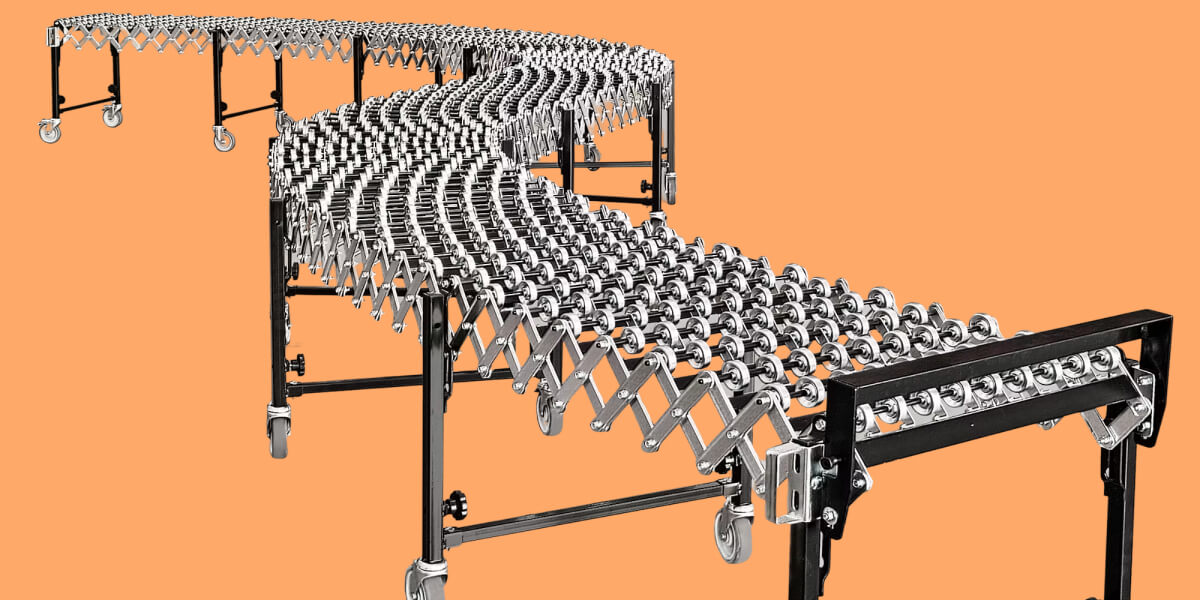
A gravity conveyor moves products without a powered motor. Instead, products travel through manual force or by using gravity along a slightly declined conveyor.
Gravity roller and skatewheel conveyors are common in warehouses, shipping departments, loading areas, assembly stations, and temporary packaging lines. Because they are not motorized, they require less electrical equipment and typically cost less to install and maintain than powered conveyors.
Gravity conveyors work best for cartons, totes, cases, and other products that can roll smoothly across the conveying surface.
Chain Conveyors
A chain conveyor uses one or more powered chains to pull or carry products along a defined path. Chain conveyors are commonly used for pallets, racks, automotive components, drums, and other heavy or rigid loads.
Depending on the design, products may rest directly on the chains or on fixtures attached to them. Some systems use a tabletop chain or flexible chain that follows a curved track through production and packaging equipment.
Chain conveyors are often selected when loads are too heavy, hot, oily, or abrasive for a conventional conveyor belt.
Screw Conveyors

A screw conveyor uses a rotating helical screw inside a tube or trough to move loose materials. As the screw rotates, it pushes the material forward toward the discharge point.
Screw conveyors are widely used for grain, powders, chemicals, food ingredients, sludge, and other bulk materials. They can move products horizontally, vertically, or at an incline and may also be used to meter, mix, or regulate material flow.
Because the material can remain enclosed, a screw conveyor may also help control dust and prevent contamination.
Pneumatic Conveyors

Pneumatic conveyors transport dry bulk materials through enclosed piping using air pressure or vacuum. They are commonly used for powders, pellets, granules, flour, plastic resin, and chemical ingredients.
These systems are especially useful when materials must travel around equipment, through multiple facility levels, or across long distances. Because products move inside enclosed pipes, pneumatic conveyors can reduce dust, spills, and exposure to the surrounding environment.
Overhead Conveyors

Overhead conveyors transport products above the production floor using chains, trolleys, carriers, or enclosed tracks. They are commonly found in automotive plants, finishing lines, garment facilities, assembly operations, and manufacturing environments with limited floor space.
The conveyor may follow a fixed track through multiple processes, allowing products to move through washing, painting, drying, inspection, or assembly areas. Overhead systems help preserve valuable floor space while supporting continuous production flow.
Bucket Conveyors

Bucket conveyors use containers attached to a belt or chain to move bulk materials vertically or at a steep incline. They are commonly used for grain, fertilizer, aggregates, powders, and food ingredients.
Also known as bucket elevators, these systems provide an efficient way to move material between different facility levels. The size, spacing, and shape of the buckets depend on the material and required conveying capacity.
Vibratory Conveyors

Vibratory conveyors use controlled vibration to move materials across a tray or conveying surface. They are often used in food processing, packaging, recycling, mining, and bulk material applications.
In addition to transporting products, vibratory conveyors can spread, separate, cool, screen, feed, or meter materials. Their open design also makes them useful when products need to be inspected or processed while moving.
Why Are Belt Conveyors So Common?
Belt conveyors are commonly used because they can accommodate a wider range of products than many other conveyor systems. The continuous conveyor belt supports the entire product during transport, making it suitable for items that are small, soft, unstable, or irregularly shaped.
A belt conveyor system can also be configured for horizontal movement, elevation changes, curves, or long-distance transportation. Manufacturers can customize the conveyor width, length, speed, belt material, supports, guides, and controls around the application.
Other reasons belt conveyors are widely used include:
- Simple and reliable operation
- Flexible conveyor layouts
- Gentle product handling
- Compatibility with automated equipment
- Ability to move light or heavy products
- Support for short and long conveyor runs
- Wide selection of conveyor belts
- Relatively straightforward maintenance
- Integration with sensors, robotics, and control systems
Belt conveyors can also be powered continuously or divided into independently controlled sections. Sensors and other automation components can regulate product spacing, track movement, and coordinate the conveyor with surrounding machinery.
Their broad range of available belts is another major advantage. Food-grade, anti-static, heat-resistant, oil-resistant, cleated, and modular plastic belts allow the same basic conveyor design to be adapted to very different operating environments.
Common Belt Conveyor Applications
Manufacturing and Assembly
Belt conveyors move raw materials, components, and finished products between workers, machines, and assembly stations. They can support manual production processes or integrate with robotics and other industrial automation equipment.
Packaging Lines
A belt conveyor system can transport bottles, containers, cartons, and packages through filling, sealing, labeling, inspection, and case-packing equipment. Guides and sensors help keep products aligned as they move between machines.
Warehousing and Distribution
Warehouses use conveyor belts to transport packages through picking, sorting, packing, loading, and shipping areas. Belt conveyors may also be combined with gravity conveyor sections or motorized roller systems to create a complete order-fulfillment line.
Food and Beverage Processing
Food-grade conveyor belts transport ingredients, prepared foods, packaged products, bottles, and cans through sanitary production environments. The conveyor material can be selected based on washdown, temperature, oil resistance, and food-contact requirements.
Pharmaceutical Manufacturing
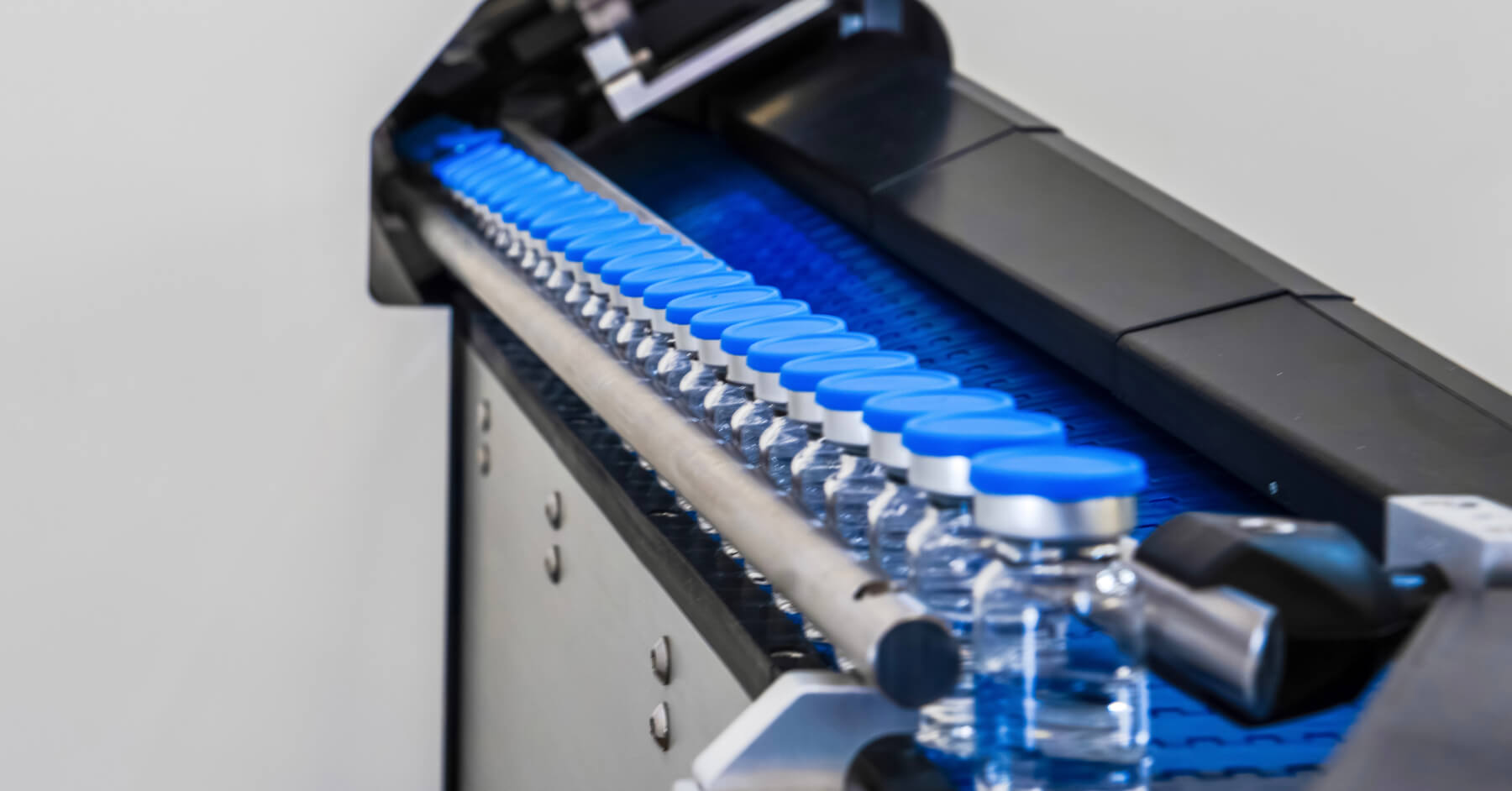
Belt conveyors move bottles, vials, cartons, medical products, and packaging materials through filling, inspection, labeling, and packaging processes. Smooth product movement helps support reliable operation at high production speeds.
Bulk Material Handling
Trough and cleated belt conveyors transport grain, sand, coal, gravel, aggregates, and other loose materials. They can move large volumes over longer distances while using less power than some alternative bulk handling systems.
Product Accumulation
Certain belt conveyors can temporarily queue or hold products when downstream machinery stops. This allows connected processes to continue operating for a limited period and helps prevent frequent shutdowns across the entire line.
Frequently Asked Questions
What Is the Most Common Type of Conveyor?
The belt conveyor is generally considered the most common conveyor type. Its continuous conveying surface, wide range of available belts, and compatibility with automated equipment make it suitable for many material handling applications.
What Are the Three Most Common Conveyor Types?
The three most common general conveyor types are belt conveyors, roller conveyors, and chain conveyors. Gravity conveyors are also widely used, particularly in warehouses, loading areas, packaging operations, and other applications that do not require motorized power.
What Is the Difference Between a Belt Conveyor and a Roller Conveyor?
A belt conveyor moves products on a continuous conveyor belt, while a roller conveyor moves products across a series of individual rollers. Belt conveyors provide full surface support, making them better for small or unstable products. Roller conveyors are generally best for cartons, totes, and rigid products with flat bottoms.
What Is a Motorized Roller Conveyor?
A motorized roller conveyor uses rollers with internal electric motors to move products. A single motorized roller can often power several surrounding rollers using connected belts. These conveyors are commonly divided into zones, allowing products to move, stop, and accumulate independently.
Is a Gravity Conveyor a Type of Roller Conveyor?
Many gravity conveyors are roller conveyors, but the broader category also includes skatewheel conveyors and gravity chutes. A gravity conveyor differs from a powered roller system because it uses gravity or manual force rather than an electric motor.
Which Conveyor Is Best for Heavy Loads?
Chain conveyors and heavy-duty roller conveyors are commonly used for pallets, racks, containers, and other heavy loads. A chain conveyor may be the better option when the product has limited support points or must operate in a demanding industrial environment.
Which Conveyor Is Best for Loose Bulk Materials?
Several conveyor types can handle bulk materials. Belt conveyors are effective for high-volume transportation over longer distances, while a screw conveyor works well for enclosed movement, metering, and controlled feeding. Pneumatic, bucket, and vibratory conveyors may also be appropriate depending on the material and process.




![[2026 Rankings] - Best Accumulation Tables and Accumulation Conveyors By Application (1)](https://dabrico.com/wp-content/uploads/2026/07/2026-Rankings-Best-Accumulation-Tables-and-Accumulation-Conveyors-By-Application-1.jpg "[2026 Rankings] - Best Accumulation Tables and Accumulation Conveyors By Application (1)")