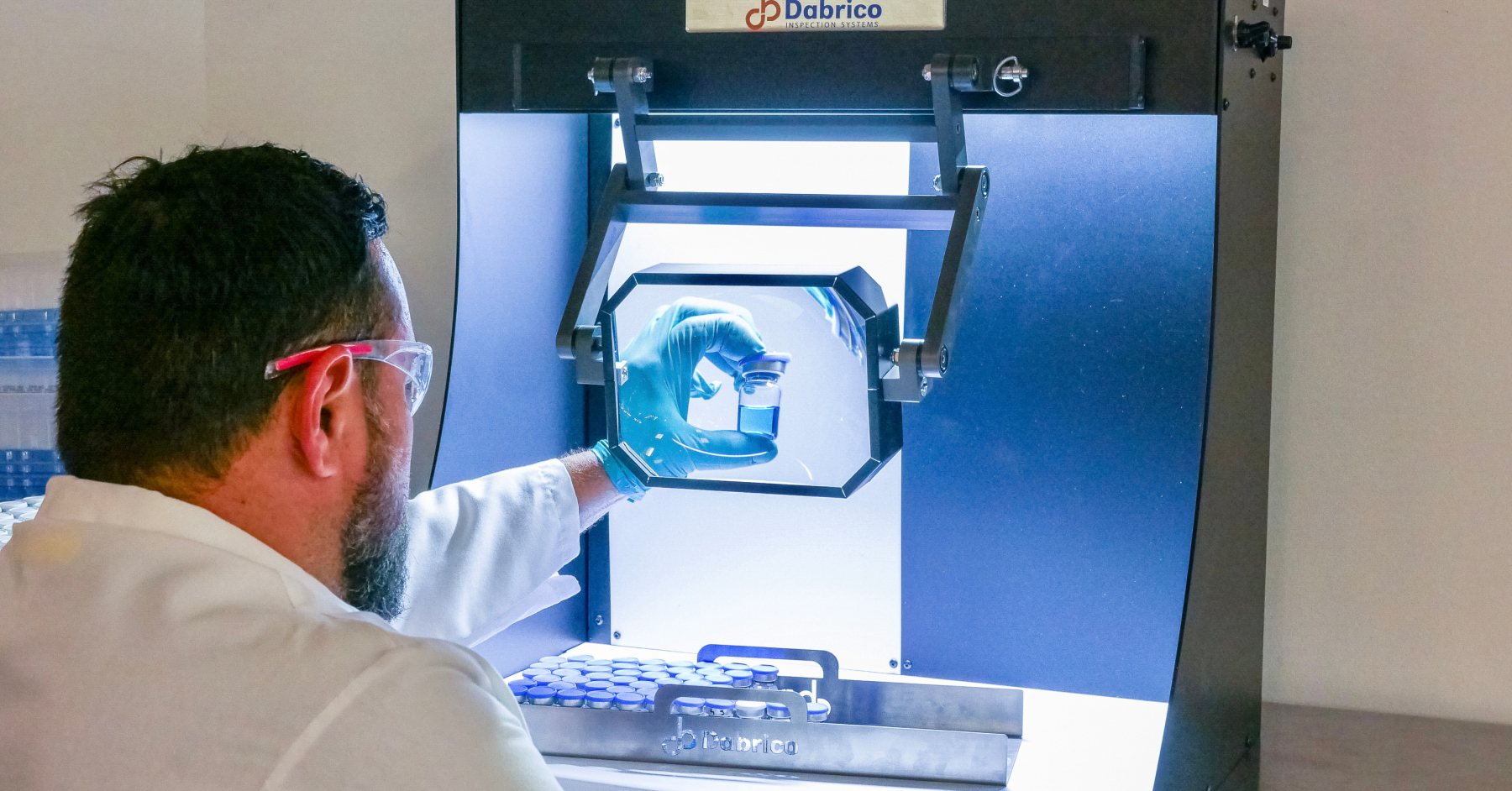
What happens when the vial inspection method you’ve relied on for years suddenly starts missing defects? That’s exactly the challenge one contract manufacturing organization (CMO) faced when its semi-automated visual inspection process began failing. What followed was a journey that would fundamentally change how they approached quality control in pharmaceutical manufacturing.
This case study considers the wider challenges of difficult-to-inspect vials, how automatic inspection systems work, and why AI-based approaches succeed where standard methods fail
The Three Types of Inspection Systems
There are three primary approaches to vial inspection, each yielding different trade-offs among speed, accuracy, and cost.
Manual vial inspection relies entirely on trained human inspectors who examine each unit against a controlled light source, and while this method remains common throughout the pharmaceutical industry, it suffers from inspector fatigue and throughput limitations that rarely exceed 20 units per minute even under optimal conditions.
Semi-automated vial inspection combines mechanical handling with human decision-making to improve efficiency without fully excluding the human element. These systems transport vials through an inspection station where operators view magnified images under optimized lighting, pushing throughput to 25-35 units per minute.
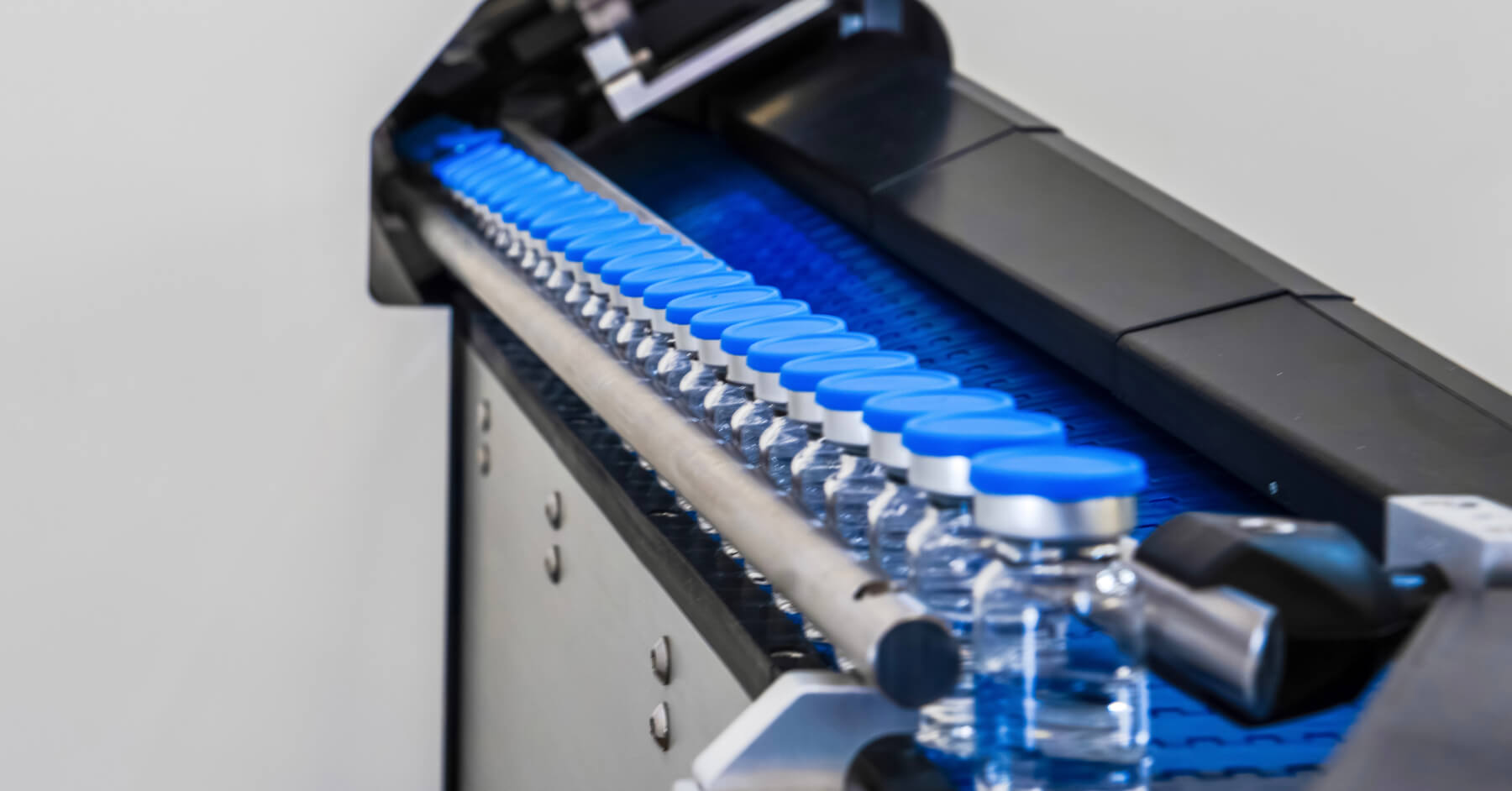
Automated vial inspection eliminates manual evaluation entirely. Fully automated systems use machine vision and artificial intelligence to analyze hundreds of images per unit at high speed, frequently exceeding 50 units per minute, while the vial inspection machine handles everything from infeed to ejection without operator intervention for individual accept/reject decisions.
How Traditional Automated Vial Inspection Machines Work
Automated visual inspection uses high-definition cameras, controlled lighting, and intelligent software to evaluate pharmaceutical products as they move through the production line. As items such as vials, tablets, or syringes pass inspection points, cameras capture high-resolution images that are analyzed in real time by algorithms trained to detect defects using supervised machine learning and traditional computer vision techniques such as image subtraction and pattern recognition.
The Challenge with Traditional Approaches to Automated Visual Inspection
Most automated visual inspection systems face difficulties in pharmaceutical manufacturing because they are built on assumptions that don’t match reality. Traditional rule-based machine vision systems are brittle when faced with products that show considerable normal variation, such as molded glass, powders, lyophilized products, and prefilled syringes. As quality expectations rise, these systems either miss subtle defects or overcorrect, driving false reject rates into the double digits and forcing manufacturers back to manual inspection.
The industry’s push toward supervised AI has not solved this problem. Defect classifiers rely on large, labeled datasets of known defects, which are costly and difficult to assemble. Even when data is available, it is often incomplete because defects are, by nature, rare and unpredictable events.

Failed AQLs as a Result of Poor Vial Inspection Practices
The product at the center of this case study was a 20-mL powder-filled molded glass vial, and it presented exactly the kind of nightmare scenario that exposes the limitations of typical vial inspection equipment. The powder refused to settle uniformly from one unit to the next, creating endless visual variation that made consistent inspection nearly impossible, while the natural variability intrinsic in molded glass containers additionally compounded the problem.
The CMO’s semi-automated inspection process began missing defects at an alarming rate. Each AQL failure triggered production delays. Defects were getting through to final release, creating compliance concerns and threatening relationships with the manufacturing sponsor, who expected reliable product quality as a non-negotiable.
Traditional automatic vial inspection machine systems were considered but quickly ruled out. These established approaches have historically struggled with exactly this type of complexity—products where normal variation looks almost indistinguishable from actual defects, where the inspection process must somehow learn to tolerate acceptable randomness while still catching genuine problems. The CMO began evaluating whether AI-based inspection could finally deliver the flexibility and consistency the product required.
Leveraging AI-Powered Machine Vision To Consistently Outperform Human Inspectors
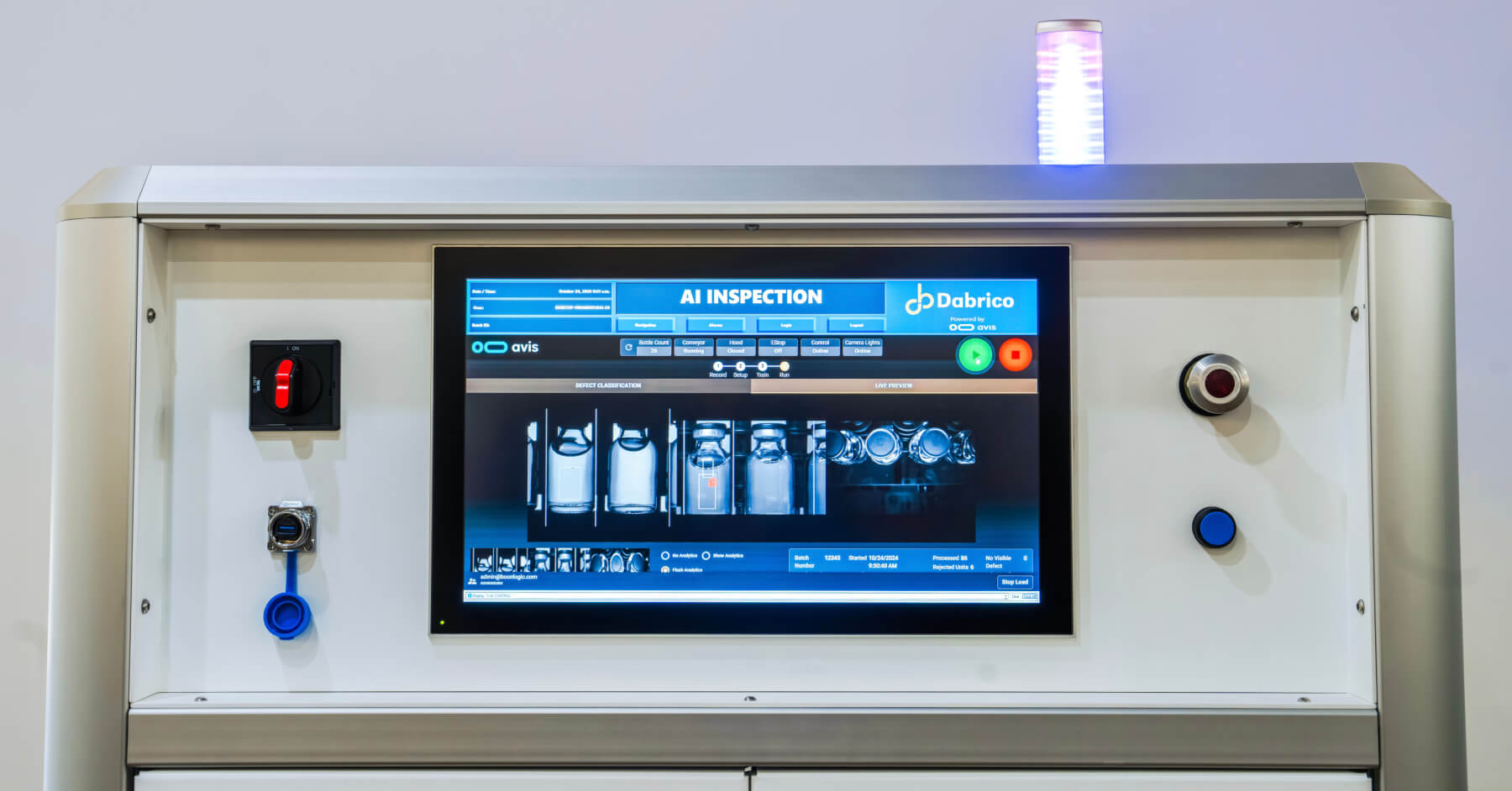
Following a preliminary feasibility study that confirmed the product was well-suited for AI-based automatic visual inspection, the CMO selected the DAI-50, powered by AVIS, for an on-site performance evaluation in partnership with Boon Logic.
Within hours of starting the test, the inspection environment was fully optimized. Lighting, camera angles, and regions of interest were configured to reflect real production conditions. Using just 500 pre-inspected, compliant units, the team created a validation-ready inspection recipe which captured the full spectrum of acceptable variation in the powder-filled vials. This included natural powder movement, adhesion to the vial sidewalls, and acceptable fill-level variability—conditions that routinely overwhelm traditional rule-based systems and drive excessive false rejects.
Once trained, the DAI-50 began inspecting vials it had never seen before.

Detection Results
To validate performance, the CMO supplied a customer-defined defect set along with a holdback set of compliant vials that had been completely excluded from training. The inspection results were decisive.
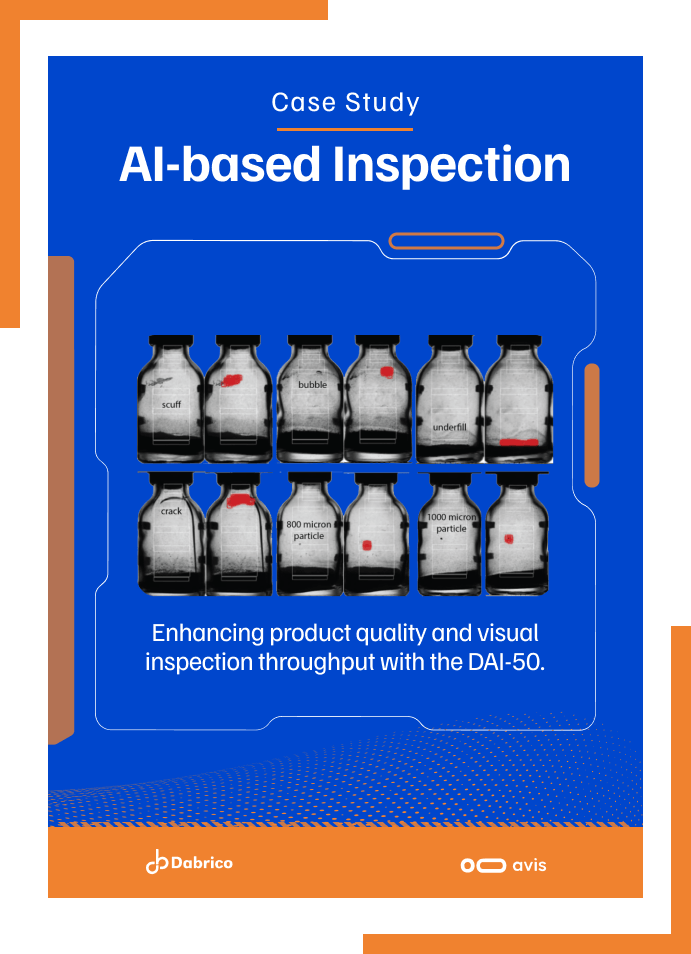
The DAI-50 demonstrated performance equal to or better than human inspectors, achieving 98% overall defect-detection accuracy spanning the full range of defect types while continuing a false reject rate of just 2.7%. Both the CMO and the manufacturing sponsor were pleased with the study’s outcomes. The CMO subsequently leveraged the results to secure funding for the DAI-50 system, citing the measurable improvement in product quality and inspection consistency as a clear business and quality justification. Although an exact ROI for this case study was not provided by the client, other use cases have demonstrated ROI exceeding $3 million annually.

Three Steps to Validate and Qualify Our Inspection Machine
The DAI-50 follows established IQ, OQ, and PQ validation workflows to demonstrate the system meets or exceeds human inspector capabilities.
Installation Qualification confirms all hardware and software components are correctly installed. Operational Qualification verifies system functionality via comprehensive testing, including the recipe development workflow, during which AVIS trains on 300-500 compliant units. A Knapp study shows that inspection performance is equal to or exceeds that of human inspectors.
Performance Qualification validates uniform performance under real production conditions through three consecutive live batches with elevated AQL sampling.
Because AVIS learns directly from compliant products rather than entailing extensive defect libraries, manufacturers reach GMP readiness faster. The result is a predictable path to validated automated solutions that protect patient safety while increasing throughput.

Conclusion
For this CMO, the challenge was not simply finding a faster inspection method. It was about finding a system designed to handle the natural variation in powder-filled molded glass vials without allowing real defects to pass or rejecting excessive amounts of acceptable product.
The DAI-50 demonstrated that AI-based automated vial inspection could meet that challenge. With 98% overall defect-detection accuracy and a 2.7% false reject rate, the system delivered the consistency needed to strengthen product quality, reduce the risk of future AQL failures, and build a clear case for automation.
Manufacturers facing similar inspection challenges may benefit from starting with a feasibility study. Evaluating the product, container, packaging, and representative defect set can help determine whether AI-based inspection is a practical fit before moving forward with a full system.
Frequently Asked Questions
What Makes Powder-Filled Molded Glass Vials Difficult to Inspect?
Powder-filled molded glass vials contain two major sources of normal variation. The powder may settle unevenly, adhere to the sidewalls, or move when the container is handled. Molded glass can also vary in shape, thickness, and surface appearance. These differences create visual noise that can resemble actual defects. An effective inspection process must tolerate acceptable variation while maintaining reliable detection of particles, container damage, and other quality concerns.
How Did the DAI-50 Achieve 98% Defect-Detection Accuracy?
The DAI-50 used controlled material handling, optimized lighting, high-resolution imaging, and AVIS inspection technology to evaluate each vial. AVIS was trained using approximately 500 pre-inspected compliant products, allowing it to learn the range of acceptable powder and glass variation. The trained recipe was then tested using a customer-defined defect set and compliant holdback vials that had not been included in training. The system achieved 98% overall defect-detection accuracy during the study.
What Is a False Reject Rate, and Why Does It Matter?
A false reject occurs when an inspection machine incorrectly identifies an acceptable product as defective. The false reject rate measures how frequently this happens. High false reject rates can increase product waste, create unnecessary reinspection work, and reduce production efficiency. They can be especially costly for expensive parenterals or products manufactured in smaller batches. In this case study, the DAI-50 maintained a false reject rate of 2.7% while achieving strong defect detection.
How Does AI-Based Vial Inspection Differ From Traditional Machine Vision?
Traditional machine vision generally relies on predefined rules, image-processing thresholds, or known defect patterns. These inspection systems work well when products are highly uniform but can struggle when normal appearance varies from one unit to another. AI-based vial inspection can instead learn patterns directly from production data. AVIS models the normal variation found in compliant products and flags images that fall outside that range, making the technology better suited to powders, molded glass, and other complex applications.
Does AVIS Require a Library of Defective Vials?
AVIS does not require an extensive library of labeled defective vials to create an inspection recipe. Its unsupervised learning approach trains primarily on pre-inspected compliant units and learns what acceptable product looks like. This reduces the need to collect large quantities of rare defects before deployment. Representative defect units are still important during feasibility testing, challenge studies, and qualification because manufacturers must demonstrate that the system can reliably detect the defects relevant to their process.
How Is an Automated Vial Inspection Machine Qualified?
Automated vial inspection machines are typically qualified through Installation Qualification, Operational Qualification, and Performance Qualification. IQ confirms that the hardware and software are installed correctly. OQ verifies that the machine, cameras, controls, rejection functions, and inspection recipe operate as intended. A Knapp study may be used to compare machine performance with qualified human inspectors. PQ then confirms consistent performance using actual products and production conditions across defined batches.
Can Automated Vial Inspection Help Prevent Failed AQLs?
Automated vial inspection can reduce the risk of failed AQLs by applying consistent inspection criteria to every unit without fatigue or variation between operators. It can also improve detection of defects that are difficult to see during high-speed manual or semi-automated inspection. However, no inspection technology can guarantee that an AQL will never fail. Strong results still depend on appropriate imaging, a well-developed recipe, qualified equipment, reliable upstream manufacturing controls, and a statistically sound sampling process.
How Can Manufacturers Determine Whether Their Product Is a Good Fit for Automated Inspection?
The best starting point is a feasibility study using representative products, compliant units, and relevant defect samples. The study should evaluate whether defects can be made visible through suitable lighting, camera positioning, product movement, and image capture. Manufacturers should also consider container type, normal product variability, required speed, vial sizes, and validation requirements. This process provides practical evidence of expected detection performance and false reject rates before a full machine investment is made.


![[2026 Rankings] - Best Accumulation Tables and Accumulation Conveyors By Application (1)](https://dabrico.com/wp-content/uploads/2026/07/2026-Rankings-Best-Accumulation-Tables-and-Accumulation-Conveyors-By-Application-1.jpg "[2026 Rankings] - Best Accumulation Tables and Accumulation Conveyors By Application (1)")