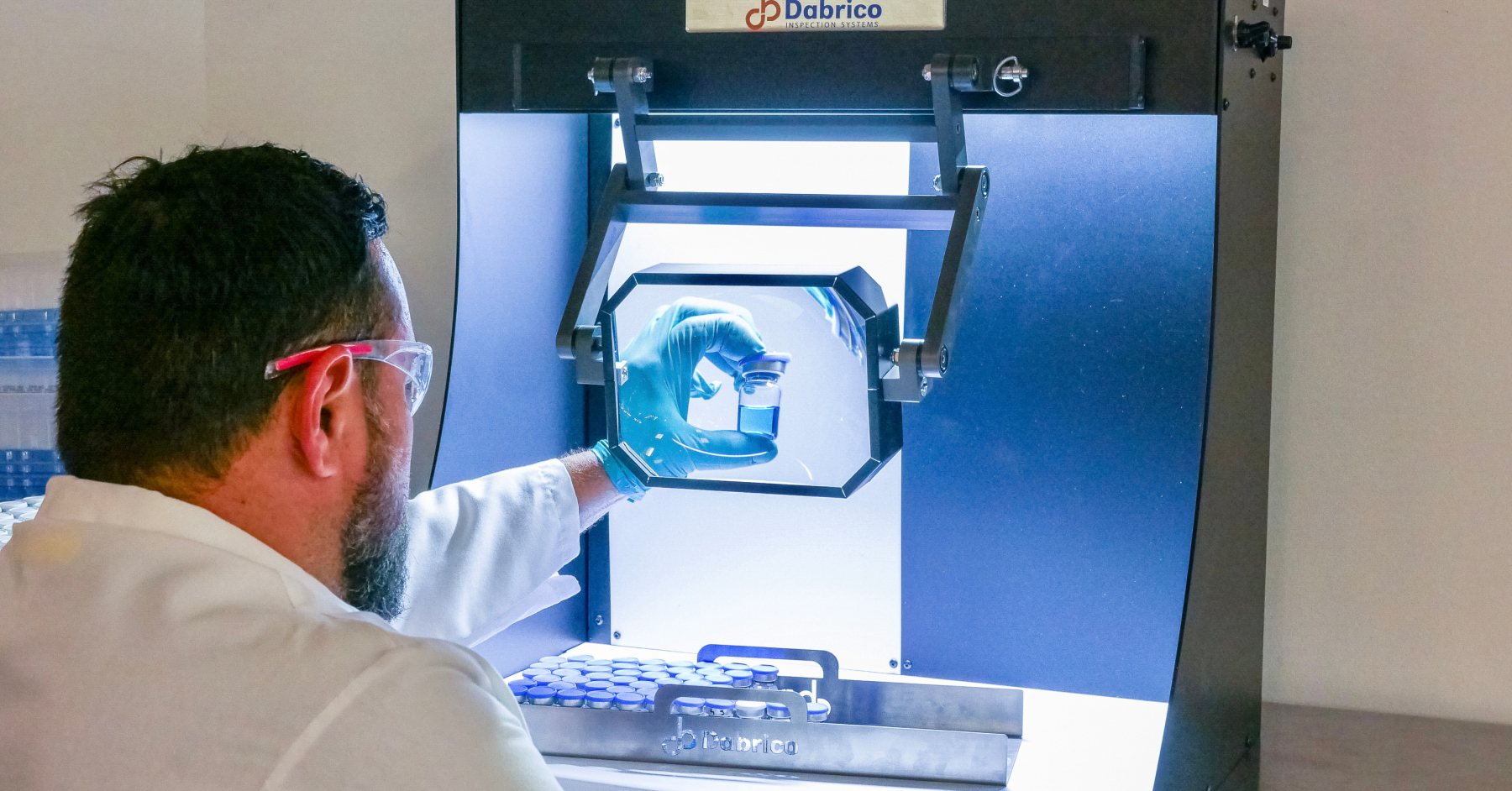
Manual or automated vial inspection remains the final control point before pharmaceutical products reach patients. Despite advances in automated inspection technology, the standards governing this process vary significantly across regulatory regions. For manufacturers operating in global markets, understanding the requirements set by the European Pharmacopoeia (EDQM), United States Pharmacopeia (USP), and Japanese Pharmacopoeia (JP) is essential for compliance and quality assurance.
Why Pharmacopeial Standards Matter
Pharmacopeias establish the baseline requirements for visual inspection of parenteral products. These standards define what constitutes an acceptable container, how inspection must be performed, and what qualifies as a defect. While all three major compendia share the goal of ensuring patient safety, their approaches differ in specificity, methodology, and acceptable limits.
Understanding these differences is not academic. A product that passes inspection under one standard may fail under another. For manufacturers supplying multiple markets, this creates operational complexity that must be managed through careful process design and validation.
European Pharmacopoeia (EP): Prescriptive and Detailed
The European Pharmacopoeia takes the most prescriptive approach to visual inspection. Chapter 2.9.20 outlines specific requirements for inspection conditions, including illumination levels, background contrast, and inspector training.
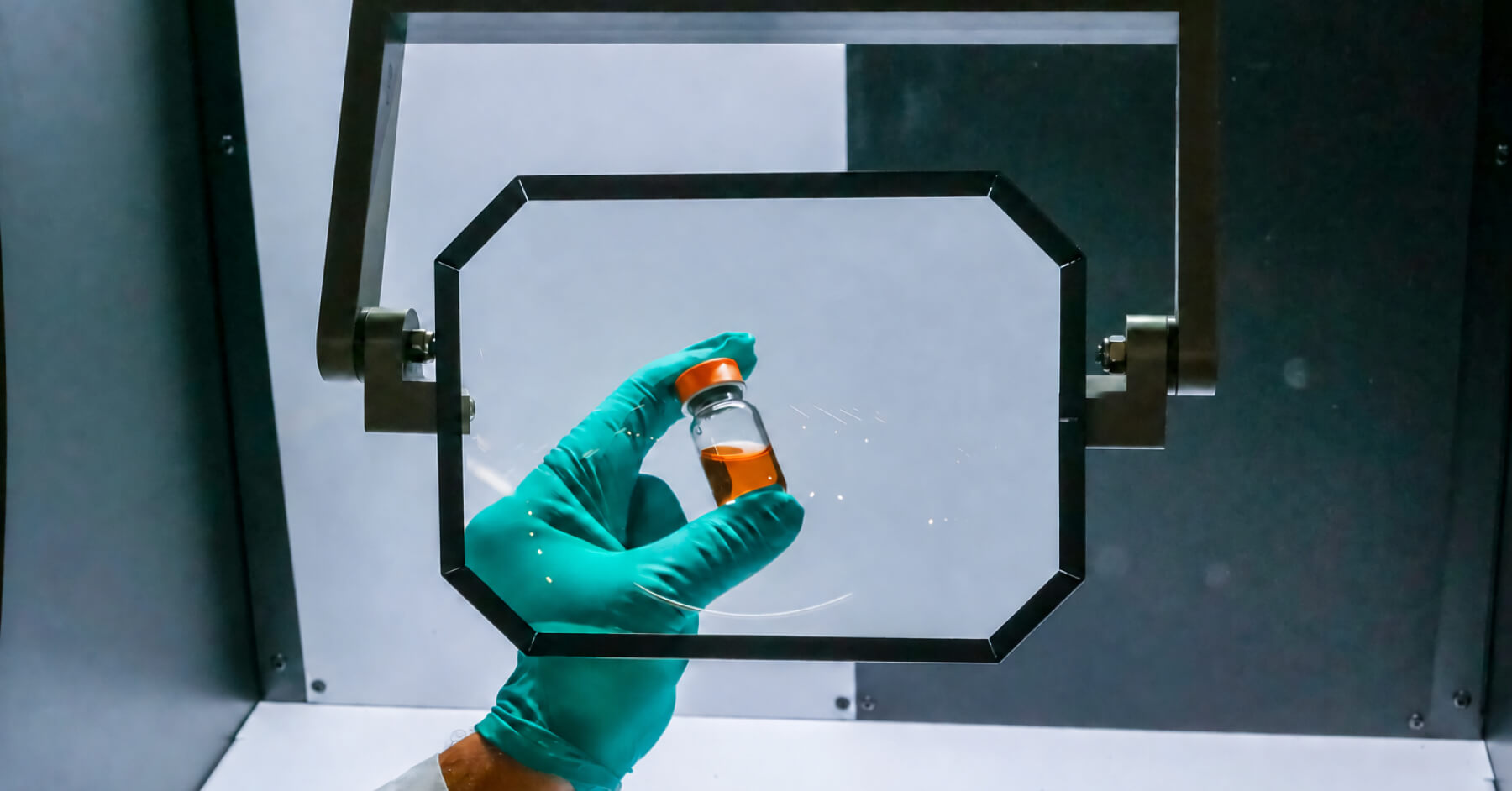
EP requires white and black backgrounds for inspection, with defined illumination of 2,000 to 3,750 lux. The standard specifies viewing angles and inspection duration. For manual inspection, each container must be examined for at least 5 seconds against each background. This level of detail provides clear guidance but also creates rigid requirements for inspection station design.
The European standard categorizes particles by size and visibility. Visible particles are defined as those with a minimum dimension of approximately 50 micrometers that can be observed under defined inspection conditions. EP also provides guidance on acceptable quality levels, though these are presented as recommendations rather than absolute limits.
One distinctive feature of EP is its emphasis on inspector qualification. The standard requires documented training programs and regular vision testing for inspection personnel. Inspectors must demonstrate the ability to detect reference particles at specified sizes, and their performance must be monitored over time.
United States Pharmacopeia (USP): Performance-Based Framework
USP takes a fundamentally different approach in General Chapter <790>. Rather than prescribing exact inspection conditions, USP establishes performance requirements that inspection systems must meet. This creates flexibility in how manufacturers achieve compliance but requires more rigorous validation.
USP defines visible particles as “extraneous, mobile undissolved particles, other than gas bubbles, unintentionally present” in the product. The standard focuses on detection capability rather than particle size thresholds. Manufacturers must demonstrate that their inspection process can reliably detect particles that pose a risk to patient safety.
The performance-based approach extends to lighting, backgrounds, and viewing conditions. USP does not mandate specific lux levels or background colors. Instead, it requires that the inspection system, when properly qualified, can detect particles of concern. This allows for innovation in inspection technology but places the burden of validation on the manufacturer.
USP emphasizes statistical process control. Chapter <1790> provides guidance on validation protocols, including how to establish detection rates, false rejection rates, and acceptable quality limits. Manufacturers must develop and justify their inspection acceptance criteria based on risk assessment and process capability.
For automated visual inspection systems, USP requires extensive validation that demonstrates equivalence or superiority to manual inspection. This includes sensitivity studies using test particles and ongoing monitoring of system performance.
Continue Reading: FDA Summary | Inspection of Visible Particles in Injections
Japanese Pharmacopoeia (JP): Hybrid Methodology
The Japanese Pharmacopoeia occupies middle ground between EDQM’s prescriptive detail and USP’s performance-based framework. JP General Tests section 6.06 establishes specific inspection conditions while allowing some flexibility in implementation.
JP requires inspection under both natural and artificial light, with white and black backgrounds. The standard specifies illumination intensity between 1,000 and 1,500 lux for white backgrounds and 2,000 to 3,000 lux for black backgrounds. These values are lower than EDQM requirements, reflecting different assumptions about optimal inspection conditions.
The Japanese standard provides detailed particle size classifications. Foreign insoluble matter is categorized as “clearly visible” (approximately 50 micrometers or larger) or “practically invisible to the naked eye” (smaller than 50 micrometers). JP establishes clear accept/reject criteria based on these classifications.
JP places significant emphasis on container quality and cosmetic defects. The standard addresses glass delamination, cracks, and other container-related defects with more specificity than either EDQM or USP. This reflects the high quality expectations of the Japanese market and regulatory environment.
Inspector qualification under JP follows a structured approach similar to EDQM, requiring documented training and periodic vision testing. However, JP provides more detailed guidance on test methods for assessing inspector capability.
Practical Implications for Manufacturers
The divergence in pharmacopeial standards creates several challenges for global manufacturers. Inspection equipment must be configurable to meet different lighting and background requirements. Standard operating procedures must account for varying inspection durations and methodologies. Quality acceptance criteria may need adjustment depending on the target market.
Automated inspection systems offer advantages in this environment. Modern vision systems can be programmed to apply different detection algorithms and acceptance criteria based on regulatory requirements. However, validation becomes more complex when demonstrating compliance with multiple standards simultaneously.
Inspector training programs must cover all applicable standards when products are destined for multiple markets. This increases training complexity and requires careful documentation to demonstrate competency across different regulatory frameworks.
The trend toward harmonization continues, but meaningful differences persist. Manufacturers should monitor updates to all three compendia and participate in industry working groups addressing visual inspection standardization.
Conclusion
Pharmacopeial standards for visual inspection reflect different regulatory philosophies and quality expectations. EDQM provides detailed prescriptive requirements, USP emphasizes performance-based validation, and JP combines elements of both approaches. Success in global pharmaceutical manufacturing requires understanding these differences and designing inspection processes that satisfy all applicable standards while maintaining efficiency and reliability.
As automated inspection technology evolves, the flexibility of performance-based standards may prove advantageous. However, prescriptive requirements provide clarity that simplifies compliance demonstration. Manufacturers must navigate this landscape strategically, investing in systems and processes that support global market access while ensuring consistent product quality.




![[2026 Rankings] - Best Accumulation Tables and Accumulation Conveyors By Application (1)](https://dabrico.com/wp-content/uploads/2026/07/2026-Rankings-Best-Accumulation-Tables-and-Accumulation-Conveyors-By-Application-1.jpg "[2026 Rankings] - Best Accumulation Tables and Accumulation Conveyors By Application (1)")