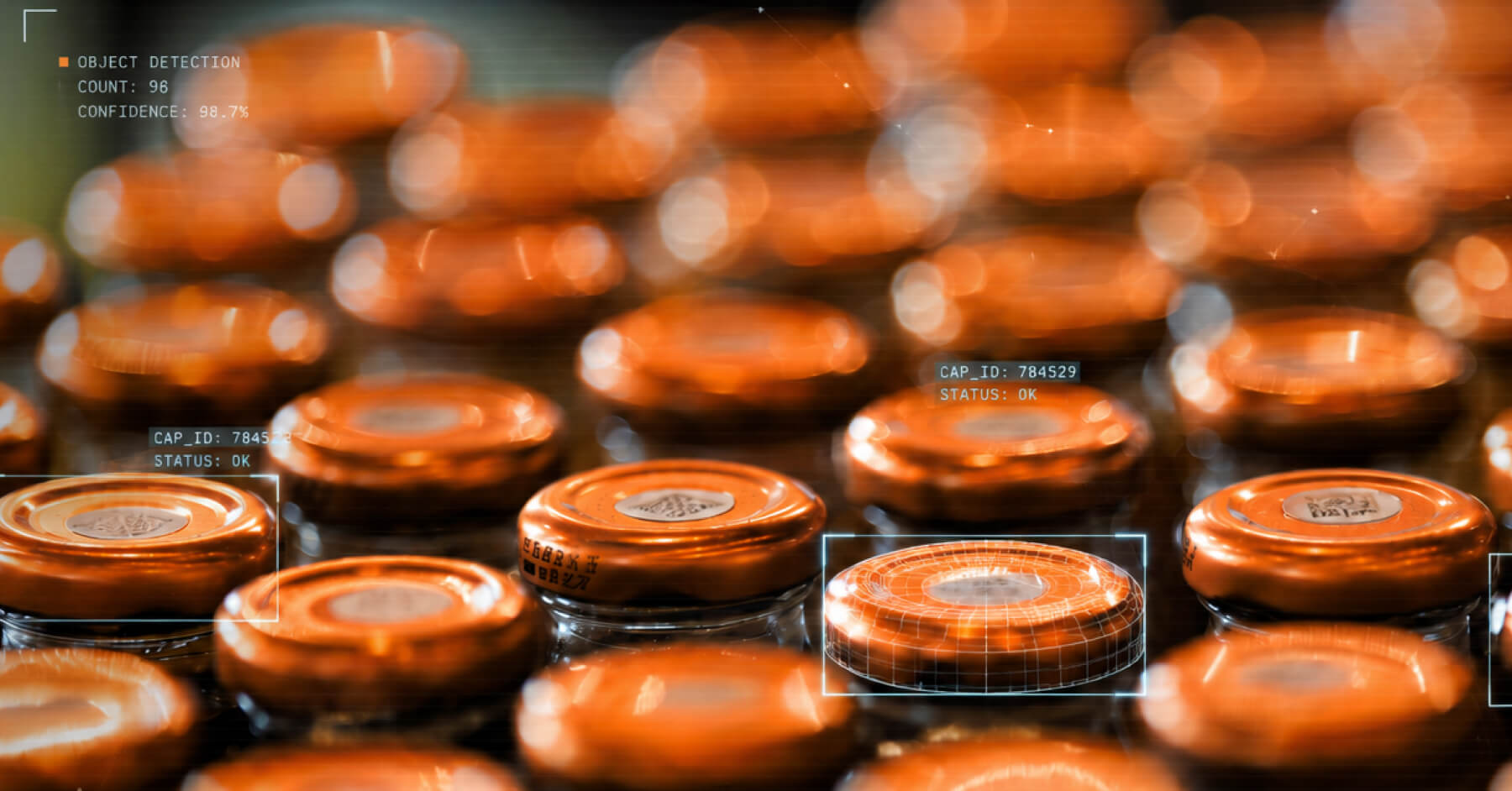
A major pharmaceutical manufacturer had ~10 million prefilled syringes sitting in quarantine—around $3.2 million in finished product that couldn’t ship. The culprit was a short-shot defect, a tiny hole in the protective cap that their semi-automated syringe inspection machine had missed for weeks. Human inspectors, given roughly two seconds per unit, simply couldn’t reliably spot the defect on caps that wobbled and rotated unpredictably during inspection.
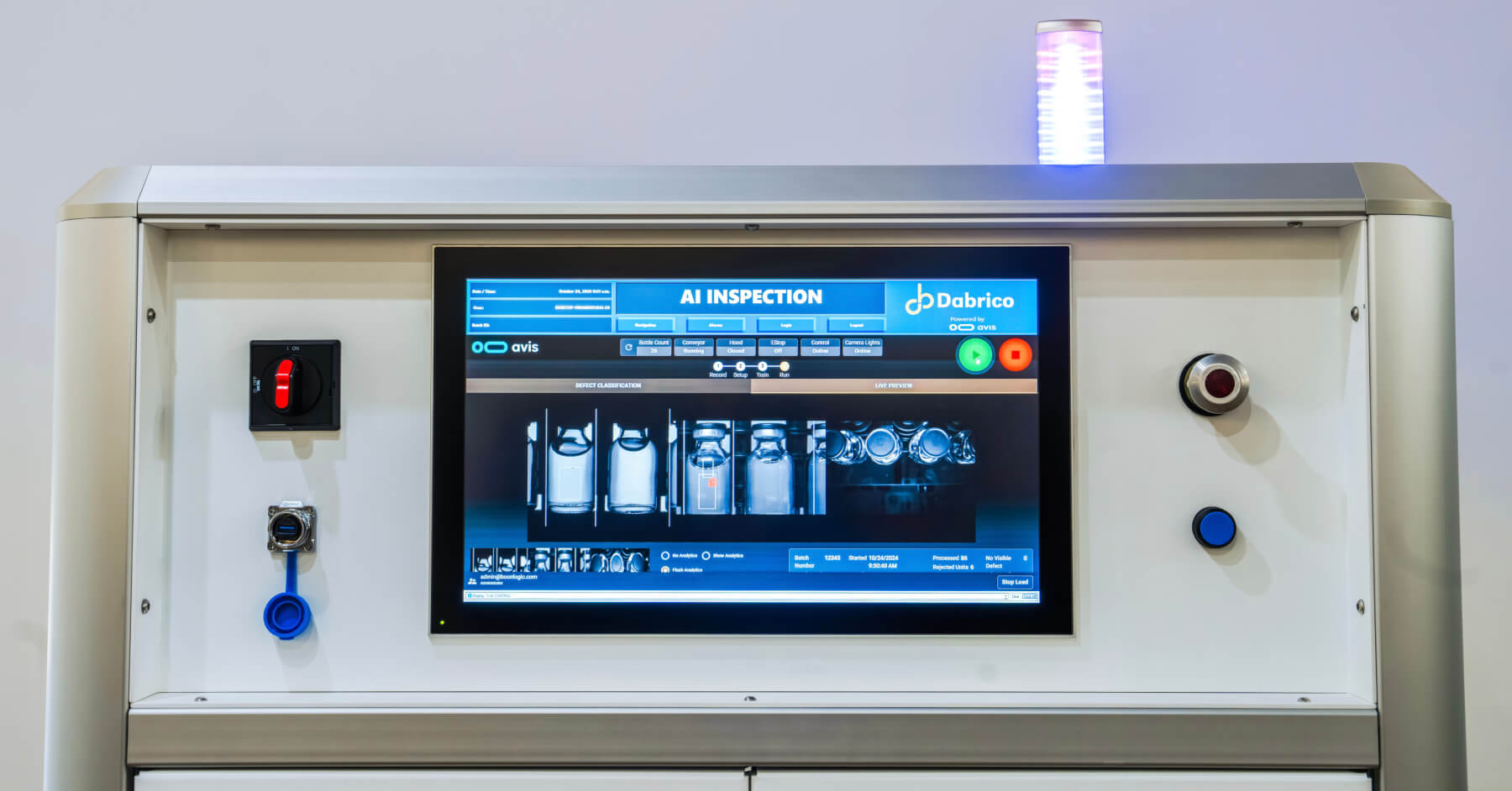
The DAI-50, powered by AVIS, solved the problem. Unlike traditional machine vision, which breaks down when products don’t present consistently, AVIS learned to track the caps despite their irregular motion and achieved 100 percent detection accuracy for the short-shot defect. The manufacturer reinspected its held product, resumed production, and implemented a fully automated visual inspection process that now outperforms human inspectors in terms of quality and speed.
This case study examines the broader challenges of prefilled syringe inspection, how automatic inspection systems work, and why AI-based approaches succeed where conventional methods fail.
The Challenge with Prefilled Syringe Inspection
Patient safety depends on catching every defect. The EU GMP Annex 1 Manufacture of Sterile Medicinal Products establishes strict requirements for 100% visual inspection, yet human inspectors face fatigue and the physical limitations of detecting microscopic defects at production speeds. Glass barrels for injectables manufactured to ISO 11040-4 standard tolerances still exhibit natural variation. The inspection process must catch true defects while tolerating acceptable variation.
The inspection of prefilled syringes presents unique challenges that manufacturers across the pharmaceutical industry continue to struggle with, and these challenges have only intensified as biologic products and complex formulations have become more prevalent in pharmaceutical production. Unlike traditional vials, prefilled syringes incorporate multiple components that require simultaneous inspection: the glass barrel, plunger, needle assembly, needle shield, and, for luer lock configurations, the closure system itself.

Methods for the Inspection of Pre-filled Syringes
There are three primary approaches to prefilled syringe inspection, each offering different trade-offs among speed, accuracy, and cost.
Manual Prefilled Syringes Inspection relies entirely on trained human inspectors who examine each unit against a controlled light source. This method remains common but suffers from inspector fatigue and throughput limitations rarely exceeding 20 units per minute.
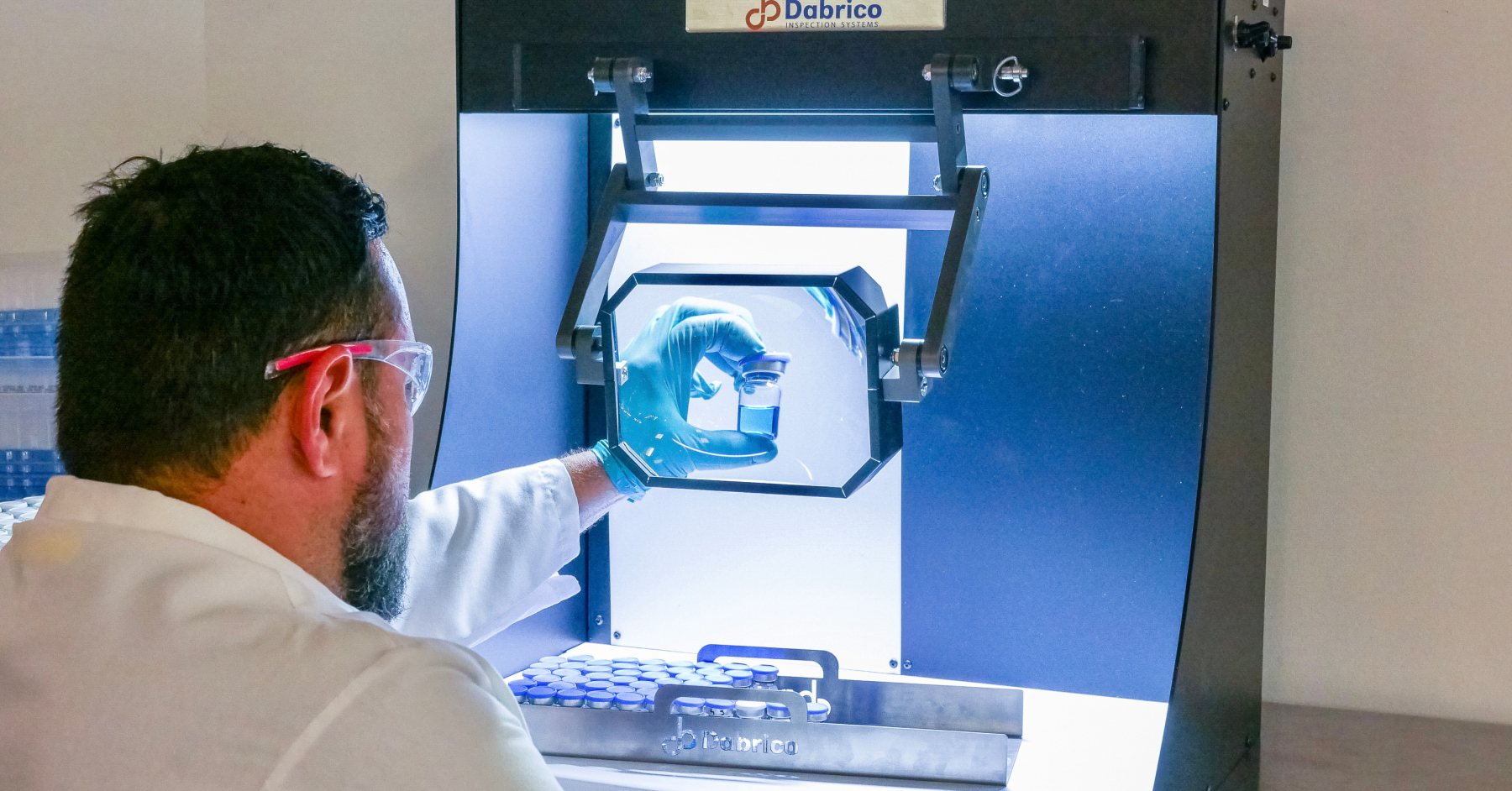
Semi-Automated Prefilled Syringes Inspection combines mechanical handling with human decision-making. Semi-automated inspection systems transport syringes through an inspection station where operators view magnified images under optimized lighting. Throughput improves to 25-35 units per minute, but a human must still make every accept/reject decision.
Automatic Inspection for Prefilled Syringes eliminates human judgment entirely. Fully automated systems use machine vision and AI to analyze hundreds of images per unit at speeds exceeding 50 units per minute. The syringe inspection machine handles everything from infeed to ejection.
How Automated Prefilled Syringe Inspection Works
Automatic inspection systems integrate three core subsystems that must work in concert to achieve reliable defect detection.
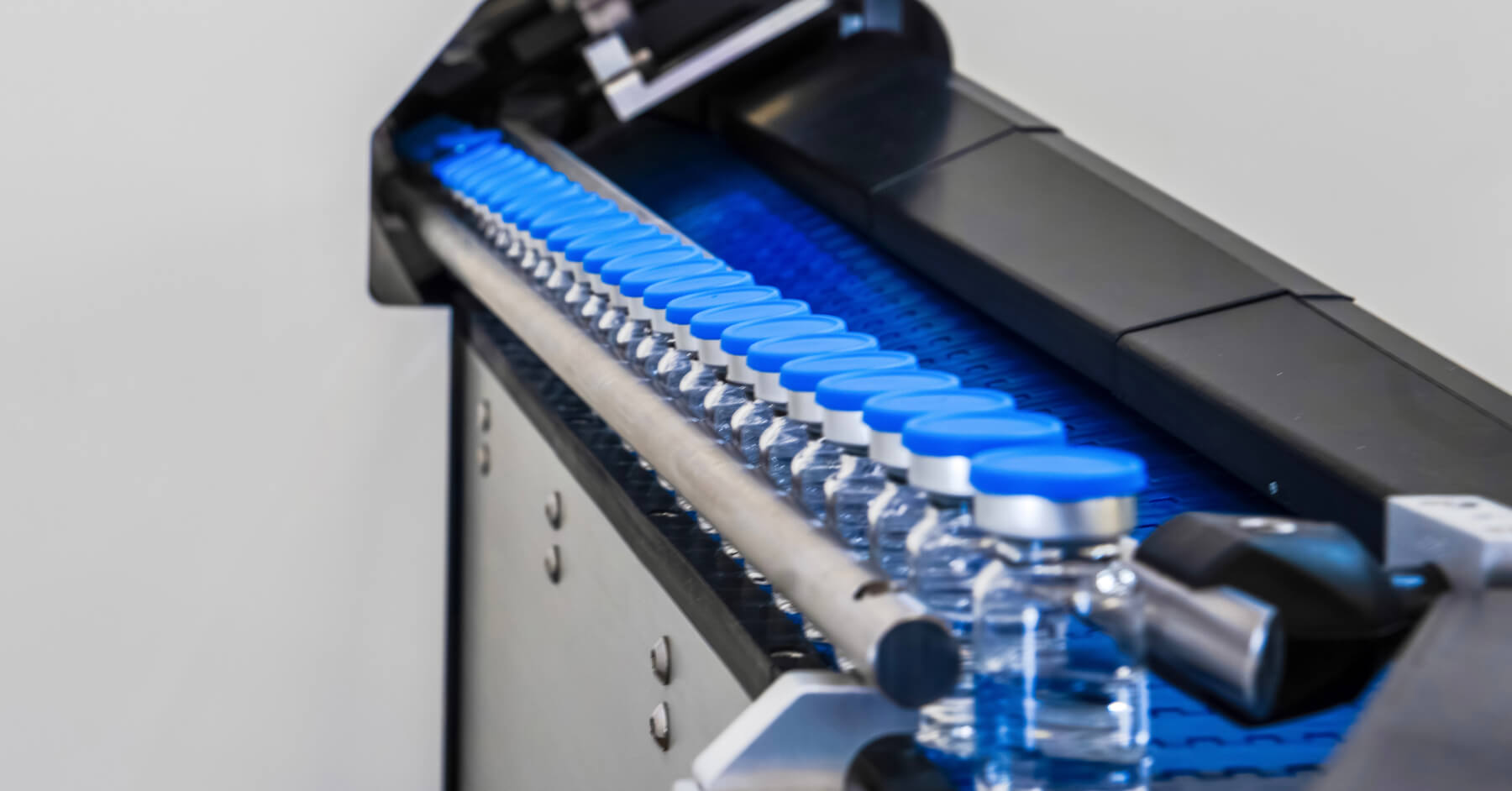
Material Handling precisely controls how each prefilled syringe moves through the inspection zone. The DAI-50 uses a roller-based transport that rotates each unit 360 degrees while maintaining gentle handling. A controlled pre-spin creates a vortex within liquid products, suspending particles for detection while allowing bubbles to rise naturally.
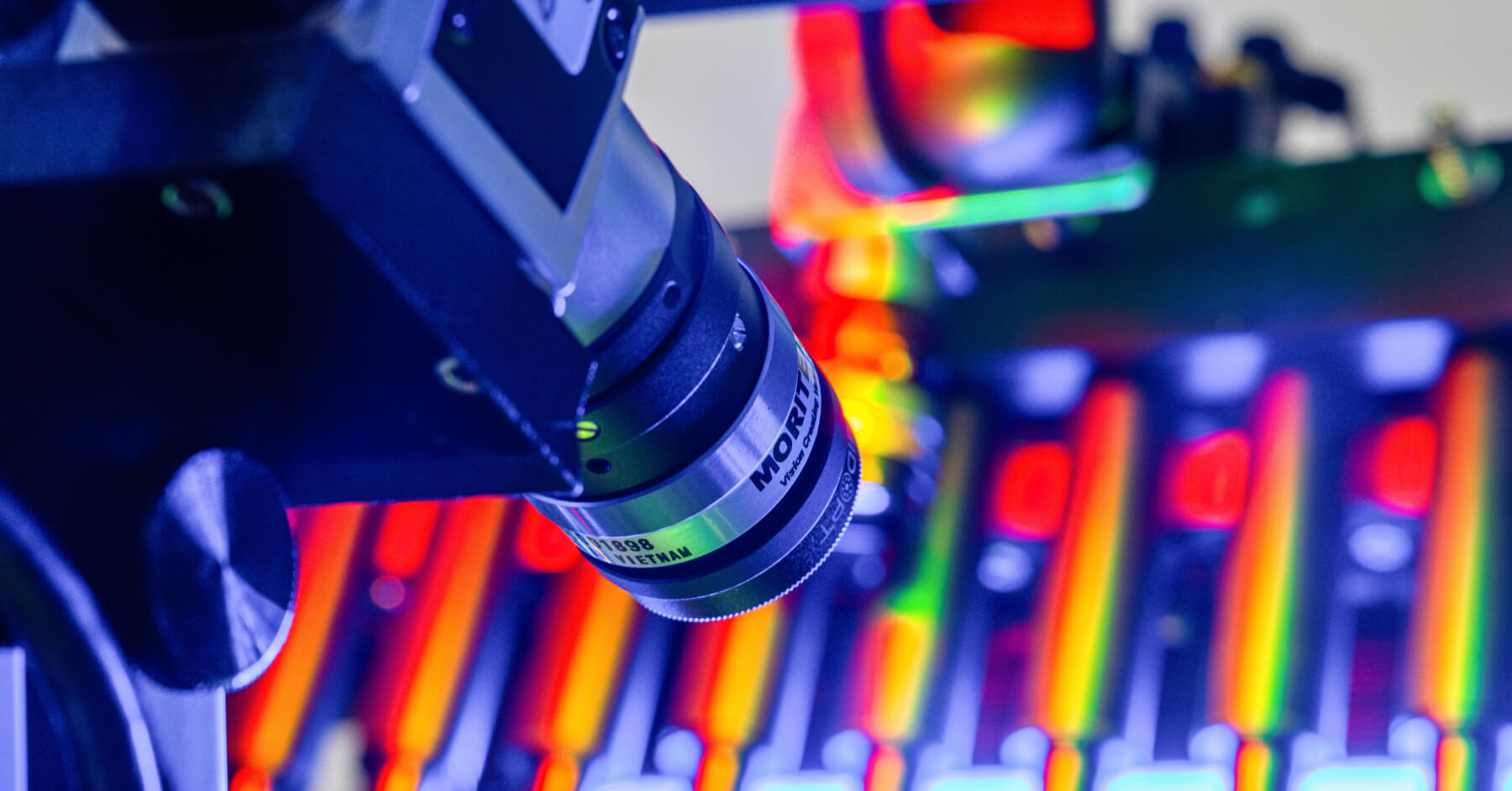
Visual Inspection Software captures and analyzes the image data. AVIS, the AI platform powering the DAI-50, uses an unsupervised machine learning approach that learns what “normal” looks like from compliant units rather than requiring extensive defect libraries. Multiple cameras positioned at different angles—backlit, side-view, and top-view—capture hundreds of high-resolution images of each syringe as it rotates through the inspection zone.
AVIS builds a high-dimensional model of normal variation during recipe training, then flags any feature that deviates significantly from it. The system can distinguish subtle differences that human inspectors struggle with: a particle versus a bubble, a crack versus a seam, a foreign fiber versus a normal reflection.

Over $3 Million In Product Held as a Result of Poor Syringe Inspection
The failure traced back to a fundamental assumption baked into traditional machine vision: that each unit will present itself consistently, frame after frame, in a predictable orientation.
Injection-molded protective caps are never geometrically perfect. They sit slightly off-center. They wobble during rotation. The variation is small—imperceptible to the naked eye—but catastrophic for image registration algorithms that compare incoming frames against a fixed reference template. When the cap tilts three degrees left instead of three degrees right, the pixel coordinates shift. The algorithm either compensates by loosening its tolerances and letting defects through, or it doesn’t compensate, resulting in false rejects on compliant products. Several years ago the site attempted to use a traditional AVI from a major equipment manufacturer but the false reject rate proved prohibitive. As a result, the site had no choice but to use dozens of semi-automated visual inspection systems.
For the human-operated SAVI systems, detection also depended on viewing angle. Inspectors looked down at the caps from above—a perspective where a small hole in a spinning, wobbling surface appears and disappears in milliseconds. The defect wasn’t invisible. It was intermittently visible, which is worse. Inspectors saw it sometimes, missed it others, and couldn’t establish a reliable detection pattern.
The failure went unnoticed for weeks. Only when downstream quality checks flagged an uptick did the site trace the problem back to inspection. By then, millions of units had already passed through.
Why our Syringe Inspection Machine Was Able to Outperform Human Inspectors
Instead of comparing frames against a fixed reference, AVIS builds a tracking model that characterizes the actual motion of components as they pass through each camera’s field of view. The system learns how caps wobble, how much they wobble, and what wobble looks like when nothing is wrong. It accommodates the real-world irregularities that defeat rigid registration approaches.
This meant AVIS could evaluate the cap surface for short-shot defects regardless of the presentation angle. A cap tilted three degrees left got inspected just as reliably as one tilted three degrees right.
AVIS also addresses the viewing-angle problem through multi-camera coverage. Where human inspectors looked down from a single perspective, the DAI-50 captures images from multiple angles—backlit, side-view, top-view—across a full 360-degree rotation. A defect that appears for milliseconds from one angle becomes visible for frames from another.

Detection Capabilities of our Prefilled Syringe Inspection Machine, the DAI-50
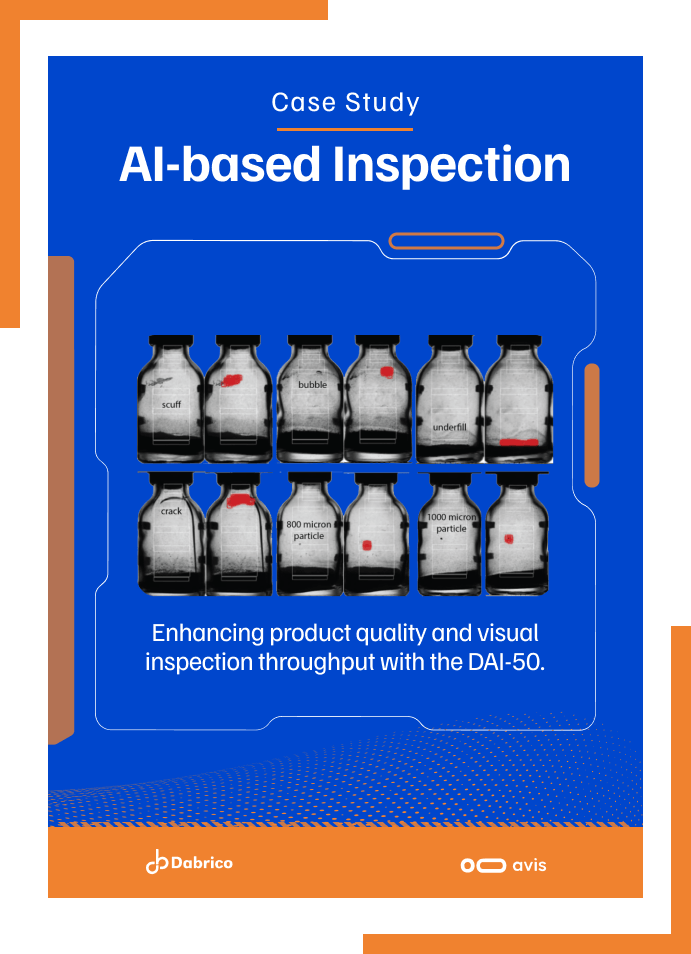
AVIS achieved 100 percent detection accuracy on the short-shot defect that triggered the quarantine event. But comprehensive validation requires testing across the full spectrum of defects.
In feasibility studies on prefilled syringe formats, AVIS demonstrated exceptional detection capabilities. Plunger defects, including missing inserts and double plungers, were detected with 100% probability. Cap-and-seal defects were detected at 97% despite their small size. Needle assembly defects reached 97.5% detection. Particulate matter from 200-micron particles to fibers achieved 93% detection. Overall detection accuracy exceeded 87%, outperforming typical human inspection while running three times as fast as semi-automated inspection.

Validating Automatic Inspection for Prefilled Syringes
Deploying automatic visual inspection for prefilled syringes in GMP production requires rigorous validation demonstrating that the system meets or exceeds human inspector capabilities. The DAI-50 follows established IQ, OQ, and PQ validation workflows.
Installation Qualification confirms all hardware and software components are correctly installed. Operational Qualification verifies system functionality through comprehensive testing, including the recipe development workflow, during which AVIS trains on 300-500 compliant units. A Knapp study that meets the requirements of the USP Chapter 1790 guidelines demonstrates that inspection performance is equal to or exceeds that of human inspectors.
Performance Qualification validates consistent performance under real production conditions through three consecutive live batches with elevated AQL sampling.
Because AVIS learns directly from compliant products rather than requiring extensive defect libraries, manufacturers reach GMP readiness faster. The result is a predictable path to validated automated systems that protect patient safety while increasing throughput.
Here is the complete FAQ section using the five selected questions. I worked several keywords into the answers without forcing terms that would weaken readability.
Frequently Asked Questions
What Types of Defects Can an Automated Syringe Inspection System Detect?
An automated system can inspect the syringe barrel, plunger, needle assembly, protective cap, closure system, and the drug product inside the container. Depending on the product and machine configuration, it may detect particulate matter, cracks, chips, fill-level issues, missing components, short-shot caps, and other container defects or cosmetic defects.
The DAI-50 can also automatically perform visual impurity inspection using multiple camera angles and controlled rotation. This allows the system to evaluate both the contents of the syringe and its surrounding glass, closure, and packaging components.
How Does AI-Based Inspection Differ From Traditional Syringe Inspection Machines?
Traditional inspection machines often compare each image against fixed rules, thresholds, or reference templates. This approach works best when every unit appears in nearly the same position. Components that wobble, rotate irregularly, or vary naturally can cause the system to miss defects or reject acceptable products.
AVIS takes a different approach. It learns the normal variation found in compliant products and identifies features that fall outside that pattern. In this case study, the technology learned how protective caps normally moved during inspection, allowing it to detect a short-shot defect regardless of the cap’s exact angle or position.
Does AVIS Require a Library of Defective Syringes?
No extensive defect library is required to create an AVIS inspection recipe. The system trains primarily on approximately 300 to 500 compliant units and learns the range of acceptable product and component variation.
This is particularly valuable in pharmaceutical manufacturing because genuine defects are intentionally rare and can be difficult to collect in sufficient quantities. Defect samples may still be used during testing and qualification to verify detection performance, but they do not form the foundation of the trained model.
How Is an Automatic Prefilled Syringe Inspection System Qualified?
Qualification typically follows the established Installation Qualification, Operational Qualification, and Performance Qualification framework.
Installation Qualification confirms that the hardware, software, cameras, lighting, controls, and handling systems have been installed correctly. Operational Qualification verifies that the equipment and inspection recipe function as intended across defined operating conditions. This phase may include a Knapp study comparing machine performance with qualified human inspectors.
Performance Qualification then evaluates the complete system under real production conditions, often across multiple batches. Manufacturers must define acceptance criteria based on their product, process, risk assessment, and quality procedures. Qualification may also consider container integrity, reject performance, data controls, and integration with upstream filling or downstream packaging operations.
How Can Manufacturers Determine Whether Their Product Is a Good Fit for Automated Inspection?
A feasibility study is usually the best place to begin. The manufacturer should provide representative compliant units, relevant defect samples, the expected production speed, and information about the container and formulation.
The evaluation should determine whether the machine can consistently handle and present the product, capture defects clearly, maintain an acceptable false reject rate, and meet required detection thresholds. Important considerations include natural variation in molded glass, bubbles or particles in liquids, component movement, and how frequently the facility changes products.
Manufacturers comparing automatic visual inspection options for prefilled syringes should evaluate performance using their own products rather than relying only on general equipment specifications.


![[2026 Rankings] - Best Accumulation Tables and Accumulation Conveyors By Application (1)](https://dabrico.com/wp-content/uploads/2026/07/2026-Rankings-Best-Accumulation-Tables-and-Accumulation-Conveyors-By-Application-1.jpg "[2026 Rankings] - Best Accumulation Tables and Accumulation Conveyors By Application (1)")